


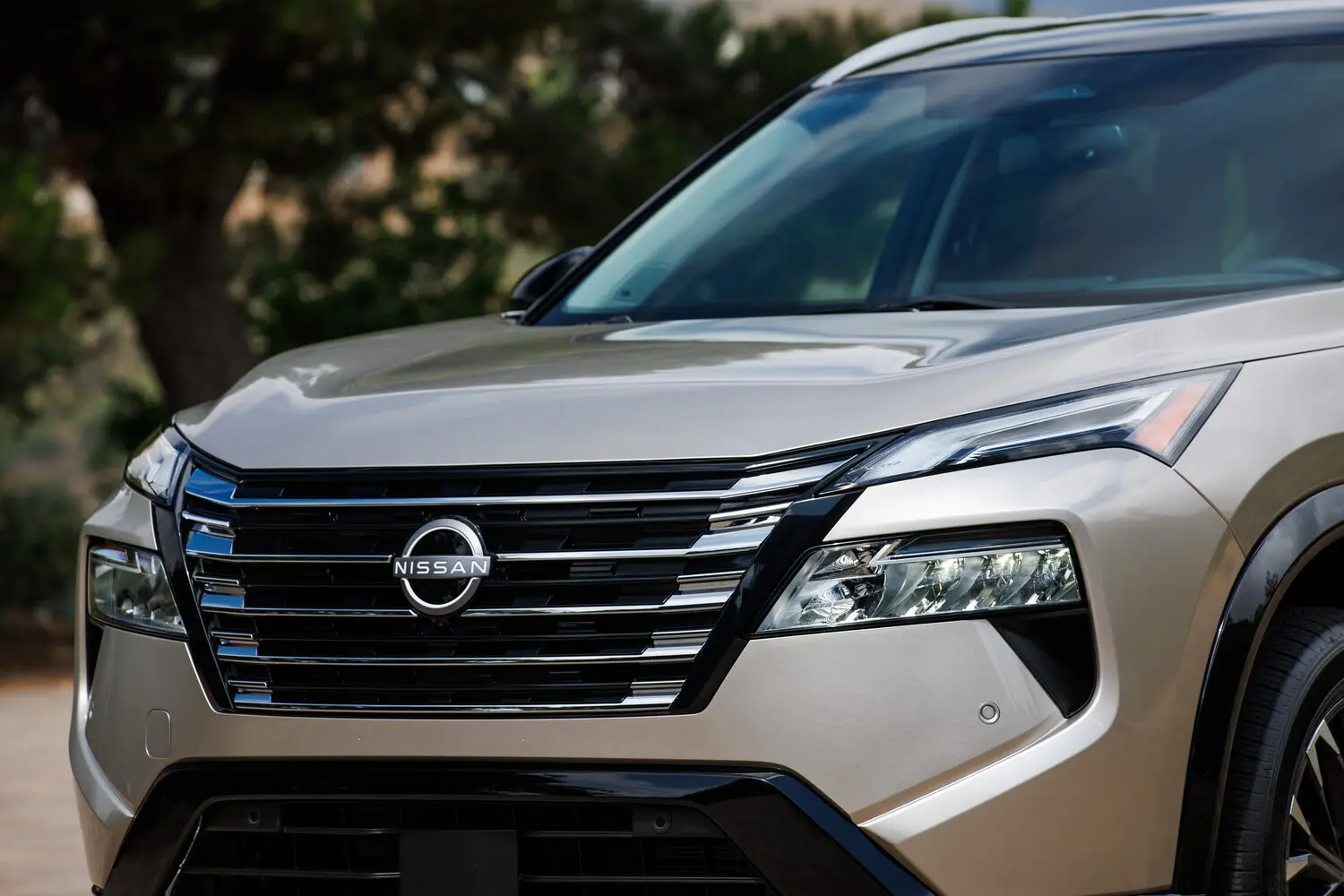
How to Buy a Used Car in Ohio — The Complete Buyer's Guide
Buying a used car in Ohio is one of the biggest financial decisions most people make outside of a home purchase — and it's one where the difference between a smart buy and a costly mistake often comes down to preparation. This guide walks through every step of the process, from setting your budget to signing the title, with specific information relevant to Ohio buyers and the Lake County market.
Whether you're a first-time buyer in Mentor, a commuter in Painesville upgrading your daily driver, or a parent in Willoughby helping a new driver find their first vehicle, the process is the same. Know your budget before you shop, inspect before you commit, and understand your financing options before you sit down at a desk.
Here's everything you need to know.
Step 1 — Set Your Real Budget Before You Start Shopping
The most common mistake used car buyers make is starting with the vehicle and working backward to the budget. Start with the budget and let it narrow the vehicle.
Your budget has two components: the total purchase price and the monthly payment if you're financing. These are related but not the same number, and confusing them is how buyers end up overextended.
For the total purchase price: Add up what you can put down in cash, what your trade-in is worth, and what you're comfortable financing. That total is your ceiling. Don't shop above it because you're counting on negotiating down — used car prices in Ohio are market-driven and the room to negotiate is narrower than most buyers expect, especially on well-priced franchise dealer inventory.
For the monthly payment: A general guideline is that your total vehicle expenses — payment, insurance, fuel, and maintenance — should not exceed 15 to 20 percent of your monthly take-home pay. On a $15,000 used vehicle financed over 60 months at a typical rate for average credit, you're looking at roughly $280 to $320 per month before insurance. On a $25,000 vehicle under the same terms, expect $460 to $510 per month.
Don't forget Ohio-specific costs at purchase:
- Ohio sales tax is 5.75 percent statewide, plus any applicable county rate. In Lake County the combined rate is 7 percent. On a $15,000 vehicle that's $1,050 at the register.
- Ohio title fee is $15 for a standard title transfer.
- Dealer documentation fees vary by dealership and are capped by Ohio law at $250 for electronic titles.
- Registration fees depend on your county and vehicle weight but typically run $34.50 to $55 for a standard passenger vehicle in Lake County.
Budget for these costs upfront. They add $1,200 to $1,500 to the purchase of a $15,000 vehicle and catching that number at the desk instead of in advance is a frustrating surprise.
Step 2 — Decide What Type of Vehicle You Actually Need
Ohio's climate, road conditions, and driving patterns should directly inform your vehicle choice — and they're specific enough that generic national advice doesn't always apply here.
For Lake County and Northeast Ohio drivers, all-wheel drive or front-wheel drive with quality tires is a practical consideration rather than a luxury preference. The stretch of I-90 between Mentor and Cleveland and the Route 2 corridor see significant winter weather from November through March. A reliable AWD compact SUV like the Nissan Rogue or Honda CR-V handles that reality better than a rear-wheel drive sedan regardless of how good a driver you are.
For daily commuters driving significant highway miles, fuel economy and reliability at higher mileage matter more than cargo space or towing capacity. A well-maintained midsize sedan like the Nissan Altima or Toyota Camry in the under-$15,000 range is often the strongest total-value decision for this buyer.
For families in Painesville, Chardon, and Eastlake who need seating for five or more, the under-$25,000 segment opens up three-row SUV options like the Nissan Pathfinder and Ford Explorer that simply aren't available at lower price points.
Be honest about what you need versus what you want. A truck that never tows anything costs more to fuel, insure, and maintain than a crossover that does the same job for daily use. The best vehicle is the one that fits your actual life, not the one that sounds the best at the dinner table.
Step 3 — Understand the Difference Between Used, CPO, and Auction Vehicles
Not all used vehicles are equal, and the category of used car you buy determines what protections you have after the sale.
Standard used vehicles from a franchise dealership are inspected before listing, priced based on market value and condition, and sold with a vehicle history report. They carry no manufacturer warranty unless one is explicitly disclosed. They represent the broadest selection and the widest price range.
Certified Pre-Owned vehicles are a distinct product. A Nissan Certified Pre-Owned vehicle must pass a 167-point inspection, meet model-year and mileage eligibility requirements, and carry a clean vehicle history. In return it comes backed by a comprehensive limited warranty and roadside assistance coverage. The premium over a comparable non-certified vehicle is typically $1,000 to $2,500 — often worth it for buyers who want predictable ownership costs and protection against unexpected repairs after the sale.
Auction and wholesale vehicles are sold without inspection, without history disclosure requirements, and without recourse if something goes wrong. Private sellers operate under similar conditions. The price may look attractive until the first repair bill arrives. Ohio's implied warranty of merchantability applies to dealer sales but not to private party transactions — when you buy from a private seller in Ohio, you are buying as-is with no legal recourse for undisclosed defects.
For most Ohio buyers, a franchise dealership — whether for a standard used or CPO vehicle — provides the inspection accountability, financing access, and post-sale support that private party purchases simply cannot match.
Step 4 — Research the Vehicle's History Before You Visit
A vehicle history report is not optional. It is the single most important document in a used car transaction and any seller who won't provide one is telling you something important.
A CARFAX or AutoCheck report shows you:
- Number of previous owners
- Accident and damage history
- Title status — clean, salvage, rebuilt, flood, or lemon law buyback
- Odometer readings at service and inspection events
- State emissions and inspection records
- Service history when reported to the national database
At Mentor Nissan, every pre-owned vehicle comes with a vehicle history report included. You review it before you commit — not after.
What to look for specifically: A single minor accident with a clean repair history is not a disqualifier. A title branded as salvage, rebuilt, or flood-damaged is. Multiple owners in a short period of time is a yellow flag worth asking about. An odometer reading that jumps backward between service events is a serious red flag for odometer fraud, which is a federal crime in Ohio but still occurs in private party transactions.
Step 5 — Inspect the Vehicle — What to Check and What to Ask
A visual inspection by a non-mechanic catches about 40 percent of potential problems. A thorough inspection by a qualified technician catches the rest. Both matter.
What to check yourself before a test drive:
- Walk around the exterior in daylight and look for paint color mismatches between panels — a sign of prior body repair
- Check all four tires for even wear — uneven wear indicates alignment or suspension issues
- Open and close every door, the hood, and the trunk — they should all open and close smoothly with no gaps
- Check under the vehicle for active fluid leaks — a small oil stain on the driveway is not unusual; active dripping is
- Start the engine cold if possible and listen for knocking, ticking, or rough idle in the first 30 seconds
- Check all lights, both interior and exterior
- Test the heat and air conditioning, both front and rear if applicable
- Connect your phone via Bluetooth and test the infotainment system fully
On the test drive: Drive it on a highway, not just a parking lot. Accelerate to highway speed and feel for vibration or pulling. Brake firmly from 40 mph and feel for pulling to either side. Turn the wheel to full lock in both directions and listen for clicking or grinding from the CV joints. Test the brakes on a flat surface with both hands off the wheel briefly — the vehicle should stop straight.
What Mentor Nissan's inspection covers: Every used vehicle on our lot undergoes a comprehensive multi-point inspection by Nissan-certified technicians covering mechanical systems, brakes, tires, suspension, electrical systems, heating and cooling, and interior and exterior condition before it is listed for sale. You are not the first set of eyes on the vehicle.
Step 6 — Understand Your Financing Options Before You Sit Down
Walking into a dealership without understanding your financing position is the single biggest leverage disadvantage a buyer can have. Thirty minutes of preparation eliminates it entirely.
Know your credit score. Pull it free at annualcreditreport.com before you shop. Your score determines your rate tier — the difference between a 680 and a 720 score can be two to three percentage points on a used car loan, which is $600 to $1,000 over the life of a $15,000 loan.
Get pre-qualified before you visit. Mentor Nissan's online pre-qualification takes minutes, doesn't impact your credit score, and tells you your likely approval range before you walk in. You negotiate from a position of knowledge rather than waiting to find out what you qualify for at the desk.
Understand the total cost of the loan, not just the monthly payment. A $15,000 loan at 7 percent over 72 months has a lower monthly payment than the same loan over 48 months — but costs $1,400 more in total interest. Extend the term only if the payment difference is meaningful to your budget.
Ohio-specific financing note: Ohio does not cap used car loan interest rates for dealership financing. Rates vary by lender, credit profile, vehicle age, and mileage. Older vehicles and higher-mileage vehicles typically carry higher rates because lenders view them as higher collateral risk. Factor this into your budget if you're considering a vehicle over 100,000 miles.
Mentor Nissan works with a broad network of regional banks, credit unions, and specialty lenders covering all credit situations — including first-time buyers, credit rebuilding, and second-chance financing programs. We run your application through multiple lender relationships to find you the best available rate, not just the first approval we receive.
Step 7 — Negotiate Effectively Without Making It Adversarial
The used car market in Ohio is transparent in ways it wasn't ten years ago. KBB, Edmunds, and CarGurus all publish real-time market pricing that both buyers and dealers use. Walking in with that data is not aggressive — it's informed, and any reputable dealership respects it.
What's negotiable on a used vehicle: Price, trade-in value, dealer add-ons, and documentation fees. Interest rate if you're financing in-house — particularly if you have a competing pre-approval from your own bank or credit union.
What's not meaningfully negotiable at a well-priced franchise dealership: A vehicle that's already priced at or below market. Franchise dealers price used inventory using the same market data tools buyers have access to. If the vehicle is already priced at market, the room to negotiate is limited — the leverage point is the total transaction, not the sticker alone.
Your trade-in is a separate negotiation from the vehicle purchase. Get a standalone trade-in offer — from Mentor Nissan's trade-in tool, CarMax, or Carvana — before you negotiate the purchase. Keeping them separate prevents the price being shifted between line items in a way that looks like a deal but isn't.
Step 8 — Review the Finance and Insurance Office Carefully
The finance and insurance office — the F&I desk — is where the paperwork happens. It's also where add-on products are presented. Some of these products have genuine value. Others are high-margin items that benefit the dealership more than the buyer.
Products worth considering on a used vehicle: An extended service contract on a non-CPO vehicle if you're buying at higher mileage and want cost predictability. Gap insurance if you're financing more than 80 percent of the vehicle's value — it covers the difference between what you owe and what insurance pays if the vehicle is totaled.
Products to evaluate carefully: Paint and fabric protection, tire and wheel coverage, and key replacement programs — these are often available at lower cost through third-party providers. Ask what the coverage actually includes and compare before accepting.
Read every document before you sign. Ohio law requires dealers to provide you with a copy of all documents at signing. The purchase agreement should reflect the price, interest rate, term, down payment, and any add-on products exactly as discussed. If a number changed between the sales desk and the F&I desk, ask why before you sign.
Step 9 — Complete the Ohio Title Transfer Correctly
Ohio title transfers are handled through the county BMV. When you purchase from a licensed Ohio dealer, the dealership handles the title application on your behalf and you typically receive your title within 30 to 45 days by mail.
What you leave the dealership with: A temporary tag valid for 45 days, a bill of sale, and your financing documents if applicable. Your permanent plates require registration at the Lake County BMV if you're not transferring existing plates.
If you're buying from a private seller in Ohio: The seller must sign the back of the title over to you in the presence of a notary. You then have 30 days to transfer the title at your county BMV. Do not drive a vehicle with an unsigned or improperly signed title — Ohio law requires a properly transferred title for legal operation on public roads.
Ready to Start Shopping?
Mentor Nissan is located at 6960 Center Street in Mentor, Ohio — serving buyers from across Lake County including Painesville, Willoughby, Eastlake, Chardon, Kirtland, and Madison. Our pre-owned inventory is updated daily and spans a wide range of makes, models, and price points.
- Browse all used vehicles at Mentor Nissan
- Shop used cars under $15,000
- Shop used cars under $25,000
- View Nissan Certified Pre-Owned inventory
- Get pre-qualified for financing
Have a specific vehicle in mind or a question about the process? Call our sales team at (440) 276-3468 — we're here Monday through Saturday and happy to answer questions before you visit.